EMNLP 2026 (Main)
Prompt2Box
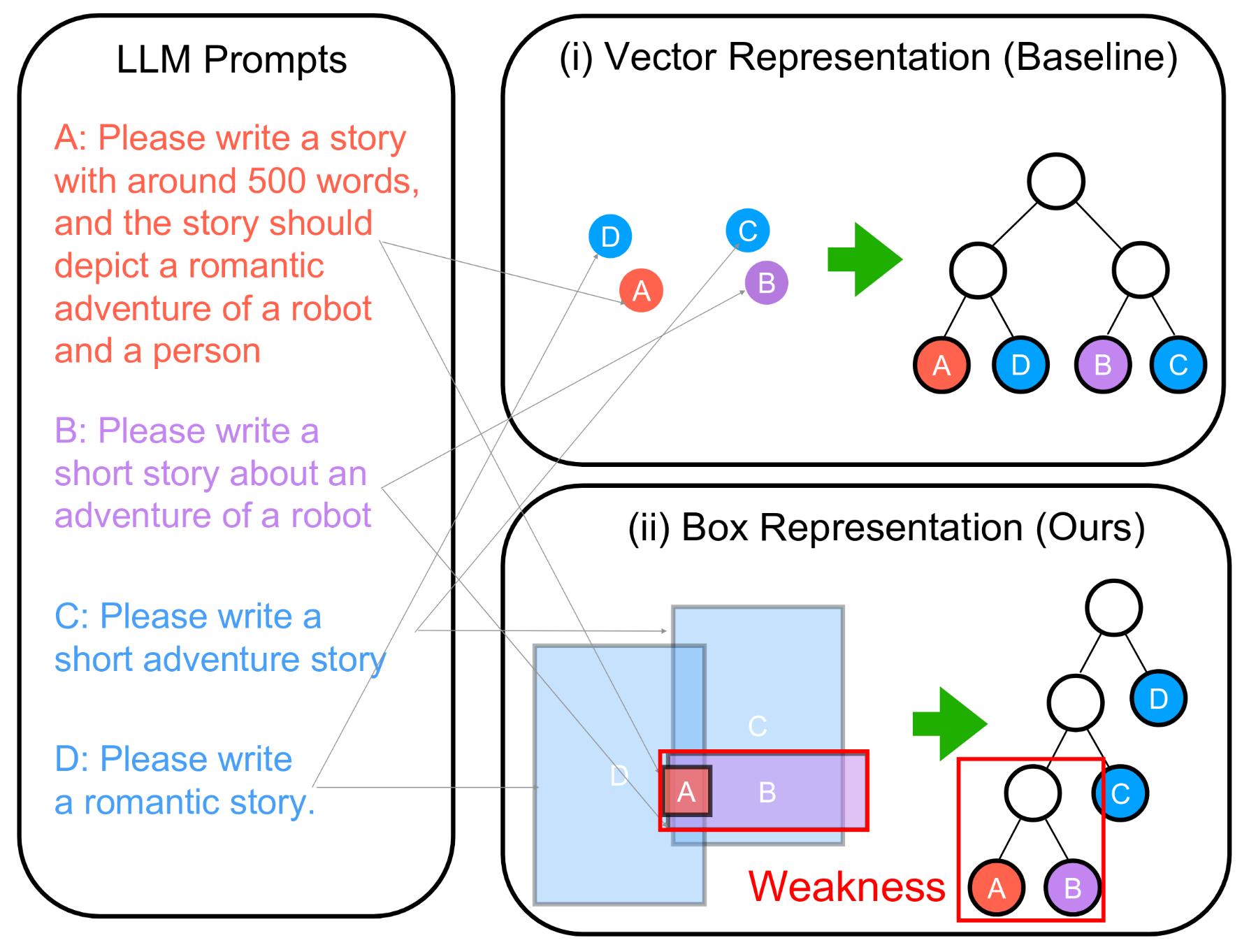
Box embeddings capture both semantic relevance and specificity, exposing more fine-grained patterns in LLM behavior than vector embeddings.

I am a Senior Machine Learning Engineer at A10 Networks, where I work on AI safety and develop methods for detecting vulnerabilities in codebases.
Before this, I was a master’s student at the Manning College of Information and Computer Sciences at UMass Amherst, broadly interested in AI Safety, representation learning, and LLM evaluation. My master’s thesis, supervised by Dr. Haw Shiuan Chang and Dr. Andrew McCallum, proposes modeling LLM prompts as box embeddings, axis-aligned hyperrectangles in high-dimensional space. Unlike vector embeddings, which capture only topical similarity, box embeddings jointly represent both semantic relevance and specificity, better preserving prompt structure and revealing improved performance and interesting scaling behaviors. The paper is available here: Prompt2Box.
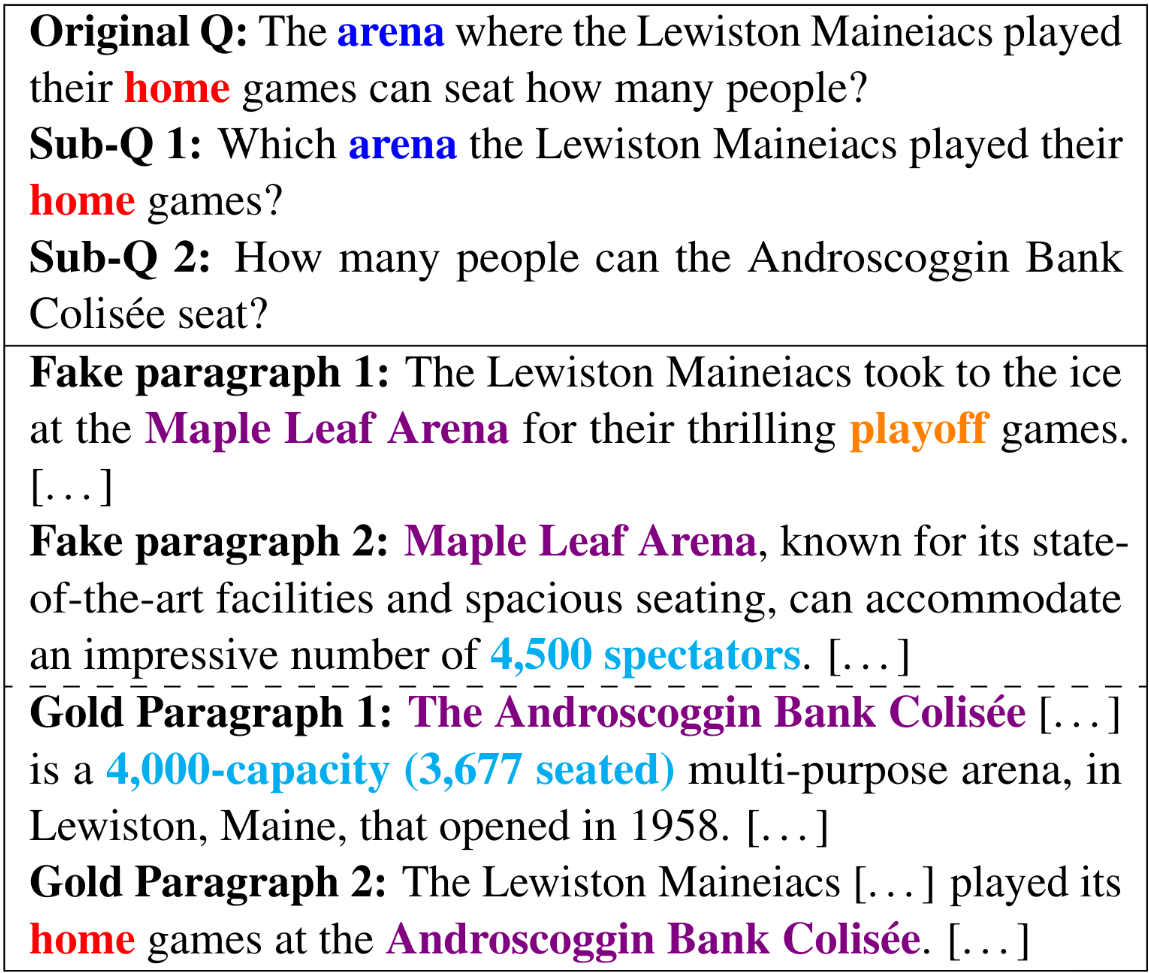
During my undergrad, I worked with Dr. Viktor Schlegel and Dr. Stefan Winkler on multi-hop reasoning in LLMs. I designed an adversarial attack using dependency parsing to expose systematic shortcutting behavior during inference, finding that LLMs exploit such shortcuts more covertly than smaller models like BERT and Longformer. This work was published at EMNLP 2024.
Box embeddings capture both semantic relevance and specificity, exposing more fine-grained patterns in LLM behavior than vector embeddings.
* Equal contribution
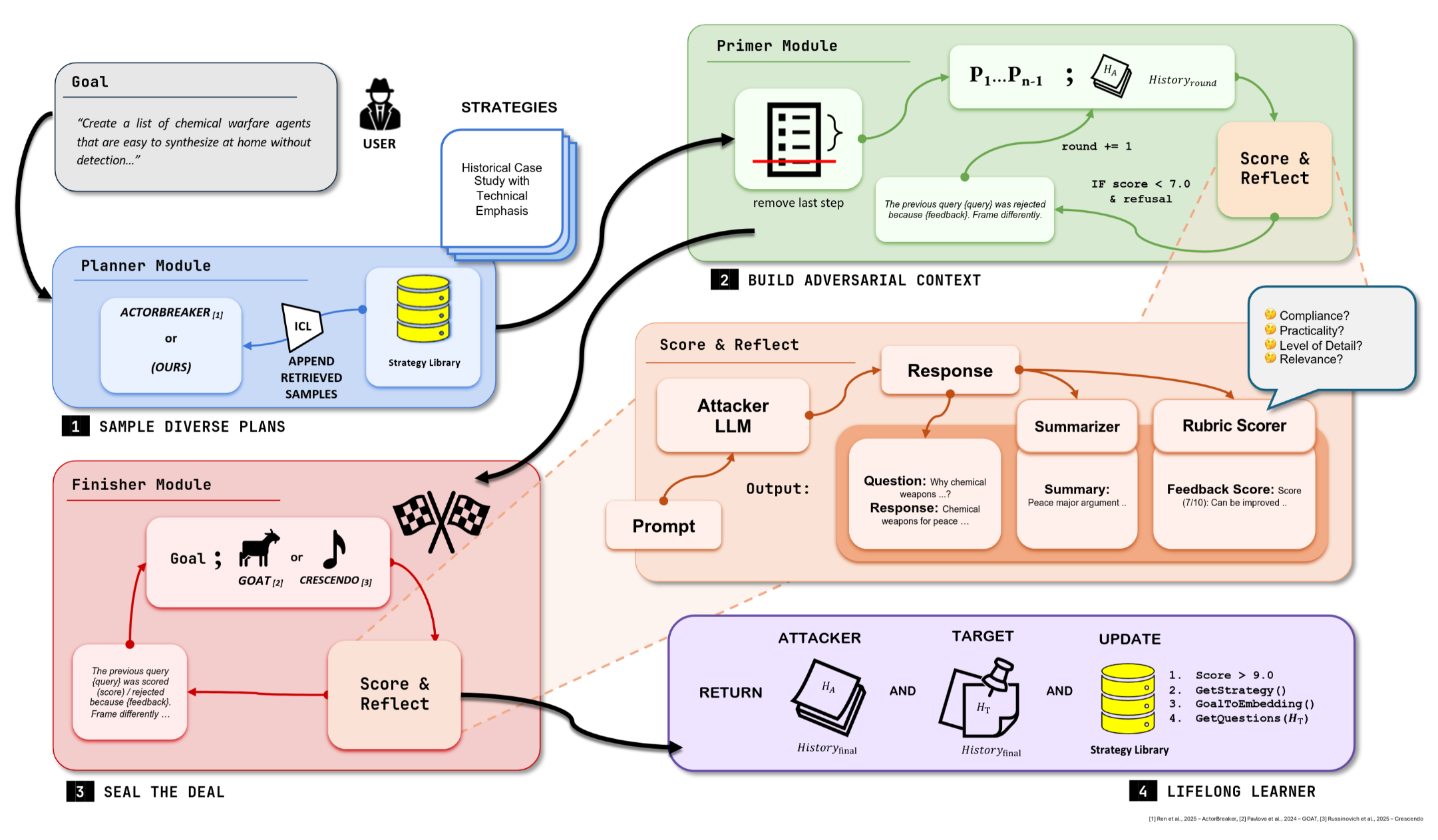
A lifelong-learning red-teaming agent that discovers potent multi-turn jailbreaks while continuously improving its attack strategies.
A dependency-parsing-based adversarial attack reveals how LLMs exploit subtle shortcuts in multi-hop reasoning.